
Cabinet shell
Satin-coat galvanized steel, powder-coated and baked.
Source: Dennis Campbell, philosophy document, Cabinet
What a fabrication drawing would need
Sheet gauge, panel joints and fastener schedule are not in the supplied sources.
Interactive principles and construction layers. Every statement carries a tier: source-supported by Dennis Campbell's documents, a cited engineering principle, an inference in the visualization, or a proposed improvement.
Product claims about legacy Polar Bear equipment come only from the supplied manufacturer documents. General principles are cited to public technical sources. Nothing here adds a new rating, tolerance or certification.
A heat pump moves heat with a refrigerant that boils at low pressure and condenses at high pressure. The reversing valve chooses which coil does which job.
Toggle overlays on a conceptual vertical water-to-air cutaway. Select any component to inspect its claim tier and what a fabrication drawing would still need.
Choose an overlay to read what it shows and its legacy basis.
Shell, lining, drainage, electrical placement and the heat exchangers, each with its source and the measurement a factory drawing would still need.
Satin-coat galvanized steel, powder-coated and baked.
Source: Dennis Campbell, philosophy document, Cabinet
Sheet gauge, panel joints and fastener schedule are not in the supplied sources.
One-inch acoustically lined sound-absorbing material inside the cabinet.
Source: Dennis Campbell, philosophy document, Cabinet
Material type, density and coverage area.
Rubber grommets at all water pipe openings, protecting against vibration and electrolysis between copper tube and steel cabinet.
Source: Dennis Campbell, philosophy document, Cabinet
Opening positions and sizes per model.
Stainless steel pan beneath the air coil.
Source: Dennis Campbell, philosophy document, Cabinet
Pan depth, slope and drain size.
Control cabinetry located above the condensate pan and drains, which reduces its exposure to condensate leaks. Pan overflow protection and compartment isolation remain design considerations.
Source: Dennis Campbell, philosophy document, Cabinet (placement); the exposure statement is a general principle
Compartment dimensions and separation detail.
Rifled tube, lanced fins, described as oversized for the unit size.
Source: Dennis Campbell, philosophy document, Air Coils
Face area, rows, fin spacing and circuiting.
Coaxial tube in a clover-leaf shape with convolutions; copper or copper-nickel.
Source: Dennis Campbell, philosophy document, Water Coil
Exchanger length, diameter and pressure rating.
Electronically commutated motor, minimum five speeds, gentle start.
Source: Dennis Campbell, philosophy document, Fan Efficiency
Wheel size, motor rating and mounting.
Scroll compressor in larger units and rotary in condo units are sourced; the isolation-mount detail is inferred in the visualization.
Source: Dennis Campbell, philosophy document, Compressor; mounting inferred
Mount type, base plate and clearance.
Standard over-rated relays, contactor and transformer; one generic anti-short-cycle and lock-out board.
Source: Dennis Campbell, philosophy document, Electrical Control Components
Wiring diagram for each model.
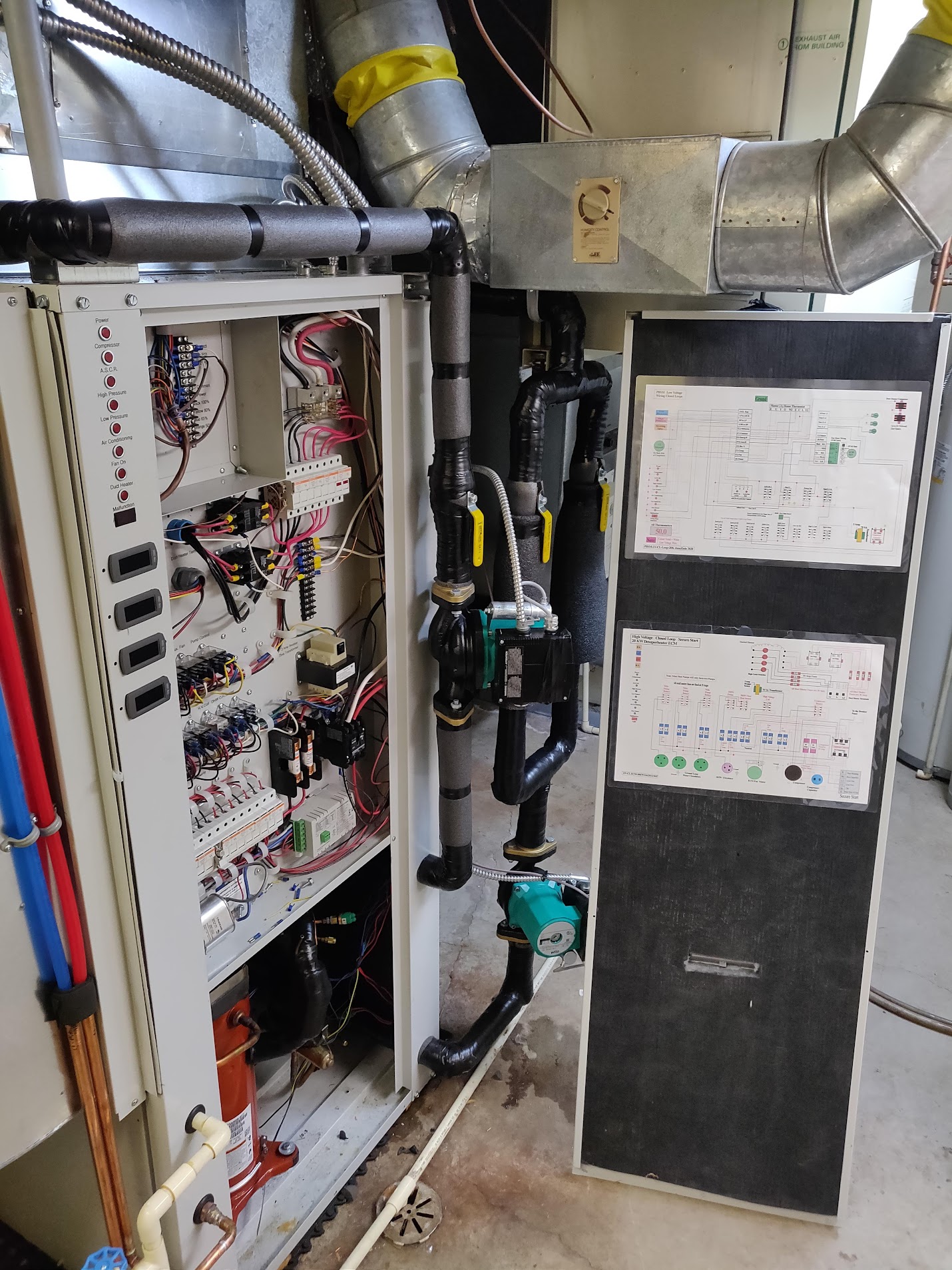
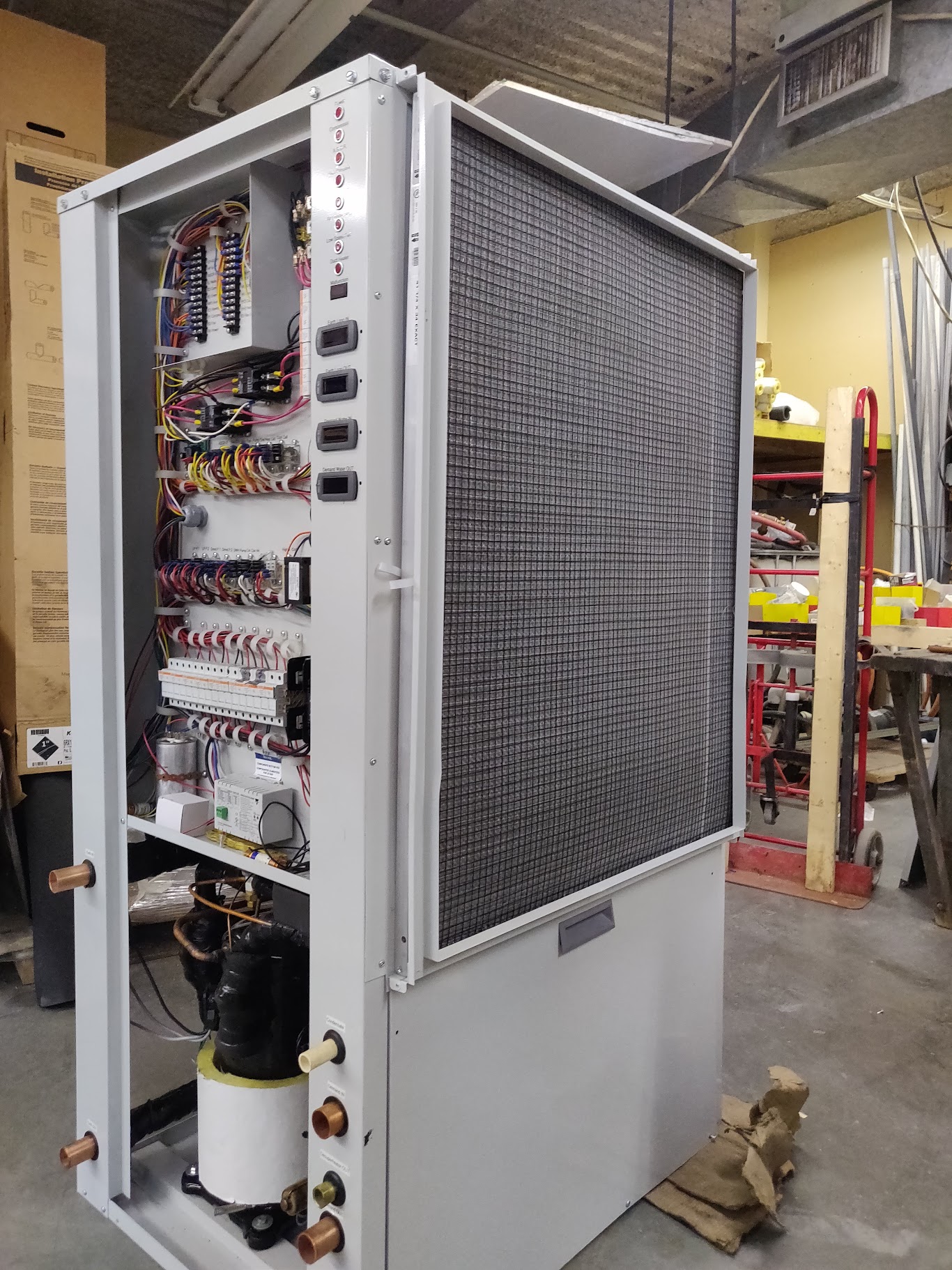
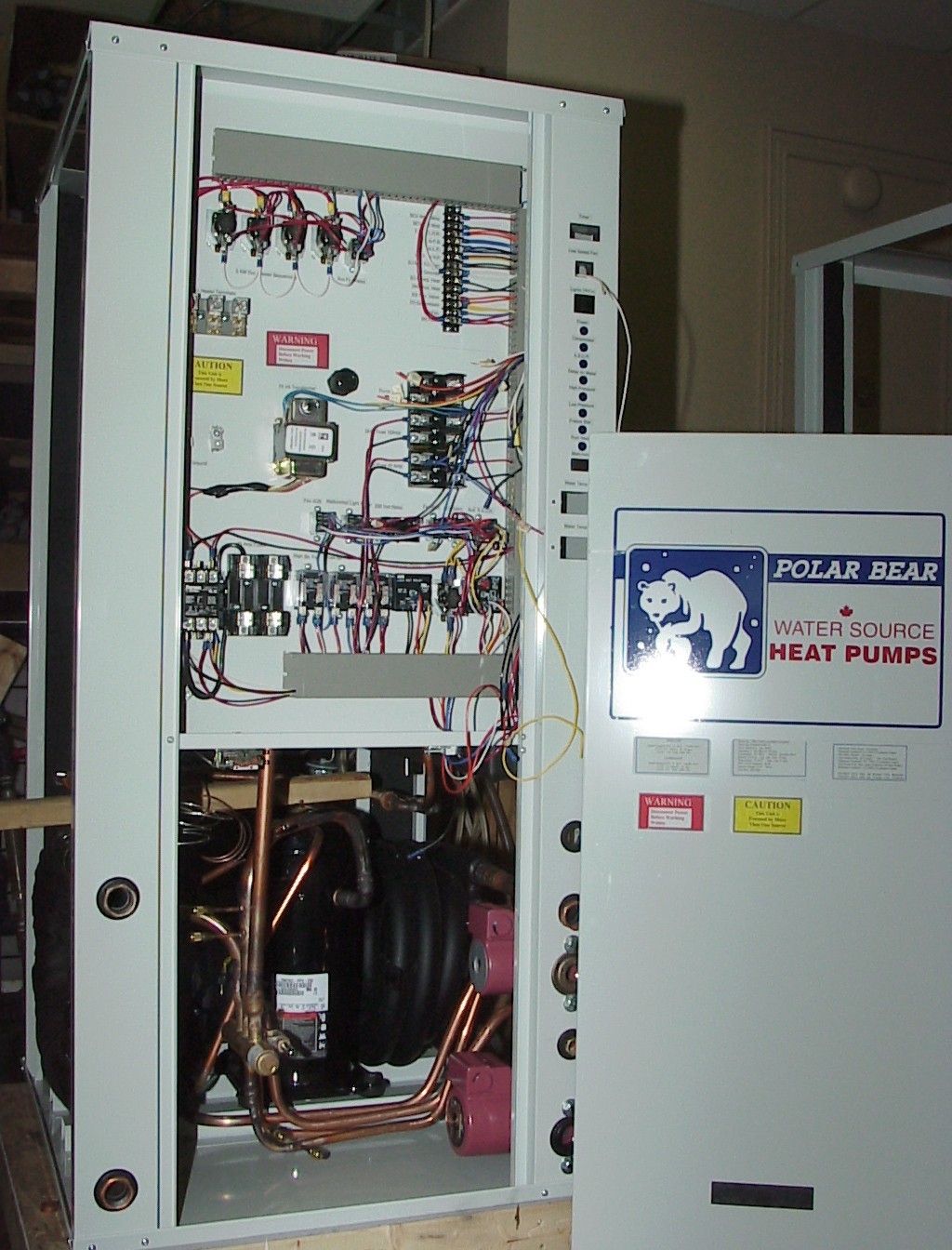
Step through the removal order. Steps that open the refrigerant circuit are flagged: they require recovery by a licensed technician.
Assembled
Refrigerant recovery required before this step.
The cutaway above dims each removed component. Removal order for the legacy cabinets is inferred from photographs; the two-section concept proposes that the blower tray, filters and controls be removable without refrigerant work.
Public engineering sources and the supplied manufacturer documents used on this page.